Famous Fado Singers: Legendary Voices of Portuguese Fado
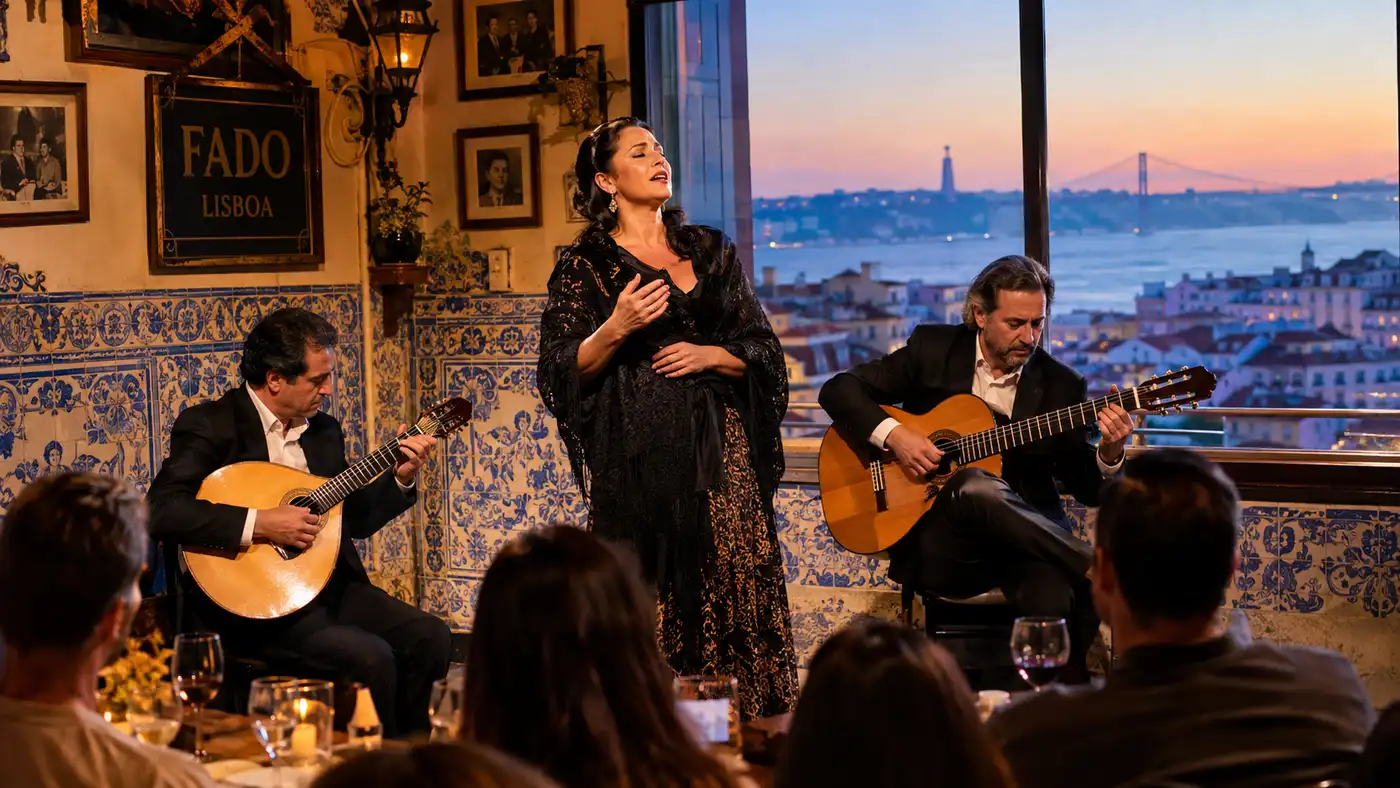
The first time you step inside a dimly lit tavern in Mouraria around 10:30 at night, the room smells of roasted sardines, damp river stone, and rough red wine. You sit shoulder to shoulder with locals on wooden benches that have seen fifty years of elbows. Then the lights drop, the two guitar players strike those signature chiming chords on a 12-string Portuguese guitar, and the room goes dead silent. Over the last century, a tiny group of famous fado singers took this working-class mourning music born in sailor flophouses and turned it into the beating emotional heart of Portugal.
Fado is not simple background dining music. People often define it through saudade, that peculiar Portuguese longing for things, lovers, or eras that are permanently gone. Yet the greatest vocalists also sing about fistfights on cobblestones, neighborhood gossip, humor, and plain stubborn survival. Listening to these legendary fado singers gives you an intimate education on Lisbon that no museum or tour guide can match. Whether you are building an introductory playlist or getting ready to spend your evenings in the alleys of Alfama, understanding who defined this sound changes everything you hear.
Book your fado show lisbon experience:
Amália Rodrigues: The Unmatched Queen of Portuguese Fado
Ask an elderly shopkeeper in Lisbon about Amália, and they will speak of her as if she stepped out of the room three minutes ago. Amália Rodrigues passed away in October 1999 at the age of 79, and Portugal promptly shut down for three full days of national mourning. She remains the golden sun around which all other Portuguese vocalists orbit. Before Amália gained fame in the late 1930s, fado lived almost exclusively in dockside taverns, bohemian brothels, and small community halls. She dragged the music onto the global stage, packing out the Olympia in Paris, Carnegie Hall in New York, and packed concert halls across Tokyo.
She also invented the visual archetype that defined female fado singers for the next half century. Amália dressed entirely in black. She draped a heavy woolen shawl over her shoulders, threw her head back with her chin raised toward the ceiling, shut her eyes tight, and unleashed a voice that was dark, round, and remarkably flexible. She was daring. Against the advice of purists who thought fado should stick to simple working-class rhyming couplets, she began setting poems by classical literary giants like Luís de Camões to traditional guitar melodies. Purists complained loudly. Amália ignored them, and the entire genre grew deeper as a result.
If you want to understand what made her distinct, track down her mid-1960s recordings like "Estranha Forma de Vida" or "Gaivota." Her vibrato does not wobble; it throbs with genuine pressure. She could bend a single syllable across three different notes without losing rhythmic control. Her legacy is everywhere in Lisbon, from street murals to tiled portraits in subway stations.
Note: Older Lisbon locals still argue about Amália's complicated relationship with the Salazar dictatorship, which exploited her fame for state propaganda despite her secret financial support of exiled left-wing poets and dissidents.
Her former yellow home on Rua de São Bento 193 is open to visitors as a house museum. It costs around €7 to tour. The rooms look frozen in time, right down to her quirky ceramic collections, bizarre gifts from foreign dignitaries, and the salon where she entertained artists until sunrise.
The Golden Age: Marceneiro, Carlos do Carmo, and Lisbon Bohemian Tavern Fado
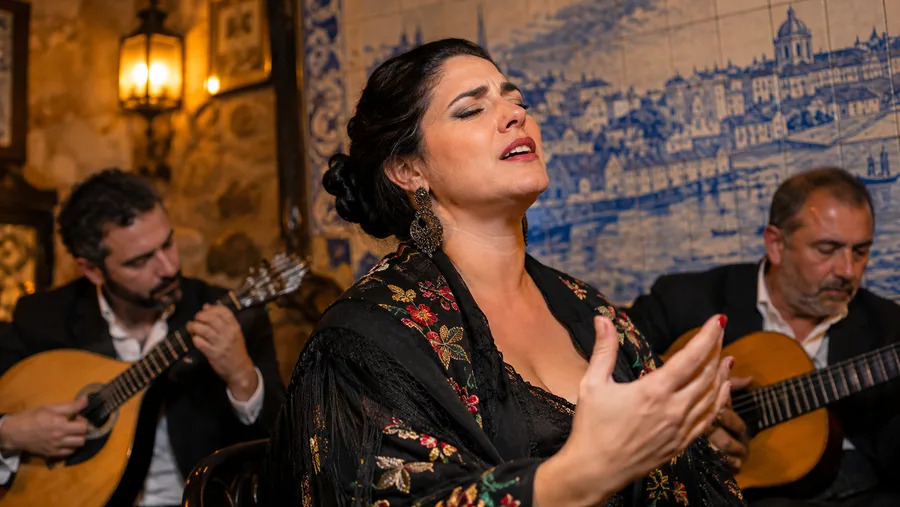
Fado is often stereotyped as an art form dominated entirely by women in black dresses. That leaves out half the story. Several of the most influential fado singers were working-class men who barely sang above an intense, smoky murmur.
Alfredo Marceneiro was born Alfredo Rodrigo Duarte in 1891. He worked as an apprentice cabinetmaker, which earned him the nickname "Marceneiro" (the carpenter). He stuck to that trade for years, singing only when he felt like it. Marceneiro hated big theaters and rarely traveled outside Lisbon. He preferred late nights in tiny taverns, performing with a wool cap tilted over one eye, a silk scarf tucked into his shirt, and one hand resting lightly on the guitarist's shoulder. His voice was raspy, dry, and cured by decades of cheap tobacco. Yet his sense of timing was unmatched. He dragged notes behind the beat and shoved them forward unpredictably, creating melodies that modern vocalists still study. If you dig into the roots of fado music history, Marceneiro created the templates for nearly every traditional melody played today.
A generation later, Carlos do Carmo took Marceneiro's street grit and gave it mid-century sophistication. Carlos was the son of Lucília do Carmo, another legendary singer, so he spent his entire childhood listening to Lisbon's finest voices in his family's restaurant, O Faia. When he began releasing his own albums in the 1970s, he dressed in sharp tailored suits and introduced instruments like the double bass, piano, and French horn. Carlos sang about modern Lisbon: the commuter ferry boats crossing the Tagus River, political changes after the 1974 Carnation Revolution, and the quiet dignity of city workers. His 1977 concept album Um Homem na Cidade stands as one of the finest Portuguese recordings ever made.
These classic voices established the golden era of mid-century fado through distinct approaches:
- Alfredo Marceneiro's tavern phrasing: an intuitive, conversational style that favored dramatic pauses and rhythmic tension over raw vocal volume.
- Carlos do Carmo's urban sophistication: sweeping arrangements and modern literary themes that pulled the genre into modern European art music.
- Hermínia Silva's theatrical vitality: a comic, brash street singer whose fast-paced delivery brought tavern humor directly to the musical stage.
- Maria Teresa de Noronha's aristocratic restraint: an aristocratic aristocrat who performed with pristine diction, crystalline clarity, and pure classical composure.
Modern Innovators: Mariza, Ana Moura, and Global Fado
By the late 1990s, critics claimed the music was quietly dying with its aging stars. Radio stations played pop and electronic music, and younger Portuguese treated fado like an old photograph tucked inside their grandmother's dresser. Then came a new wave of fado portugal singers who proved the art form could adapt without surrendering its soul.
Mariza broke onto the scene in 2001 with her debut record Fado em Mim. Born in Mozambique and raised in the tight cobblestone streets of Mouraria, she looked like nobody who had come before her. She had towering height, short peroxide-blonde hair, and wore striking modern architectural dresses. When she sang, though, the authority was ancient. Mariza possesses a massive vocal engine that can fill outdoor arenas, but her real power lies in how she pulls back to an intimate, trembling whisper. She took fado to the Hollywood Bowl and collaborated with musicians from Brazil, Spain, and Cape Verde, turning herself into an international ambassador for Portuguese culture.
Ana Moura pushed the boundaries in a completely different direction. Blessed with an earthy, low contralto, she caught the attention of international rock and pop legends. The Rolling Stones invited her on stage in Lisbon to sing "No Expectations" alongside Mick Jagger. Prince was so mesmerized by her records that he flew to Portugal simply to watch her perform in a small, smoke-free club on the Lisbon docks. In her later albums, Ana Moura started fusing fado melodies with Angolan semba, kizomba beats, and synthetic basslines, proving that fado does not need to remain trapped in amber to honor its ancestors.
Pro tip: Skip the heavily advertised tour-bus dinner shows in central Chiado if you want to hear world-class voices up close; instead, spend an evening walking through the independent venues highlighted in our Alfama walking guide.
You cannot overlook Camané, either. Many Lisbon connoisseurs consider him the greatest active male vocalist in the country. When Camané performs, he stands completely upright, keeps his arms at his sides, and refuses to use cheap theatrical gestures. Every ounce of dramatic tension comes entirely from micro-adjustments in his voice. Carminho, the daughter of singer Teresa Siqueira, matches that discipline with a rich, smoky tone that carries the unmistakable cadence of Alfama's steepest alleyways.
Book your fado show lisbon experience:
Famous Fado Singers Compared Across Generations
Each generation altered the rules of the genre. Some singers focused strictly on raw tavern traditions, while others brought in outside influences from jazz, Brazilian bossa nova, or symphonic music. The table below outlines how these legends compare across their eras and styles.
| Singer | Era | Primary Style | Signature Song | Key Influence |
|---|---|---|---|---|
| Amália Rodrigues | 1940s - 1990s | Lisbon Fado, Classical Poetry | "Estranha Forma de Vida" | Globalized fado; established modern female presentation |
| Alfredo Marceneiro | 1910s - 1970s | Fado Castiço (Tavern Traditional) | "A Casa da Mariquinhas" | Created standard melodies and syncopated phrasing |
| Carlos do Carmo | 1960s - 2010s | Urban Balladry, Orchestral | "Lisboa Menina e Moça" | Introduced modern instrumentation and social themes |
| Mariza | 2000s - Present | Contemporary World Fado | "Ó Gente da Minha Terra" | Brought fado to international concert halls and arenas |
| Ana Moura | 2000s - Present | Soul-Infused, Afro-Portuguese | "Desfado" | Blended fado with global rhythms and electronic textures |
| Camané | 1990s - Present | Purist Traditional, Intimate | "Sei de um Rio" | Mastered nuanced vocal dynamics and emotional restraint |
Notice how style splits between traditionalists and innovators. Traditionalists believe fado belongs exclusively to the Portuguese guitar, the acoustic nylon-string guitar (viola de fado), and acoustic bass. Innovators believe the voice is what makes fado, regardless of whether a cello or a snare drum sits behind it. Both sides produce incredible art.
How to Experience the Best Fado Singers Live in Lisbon
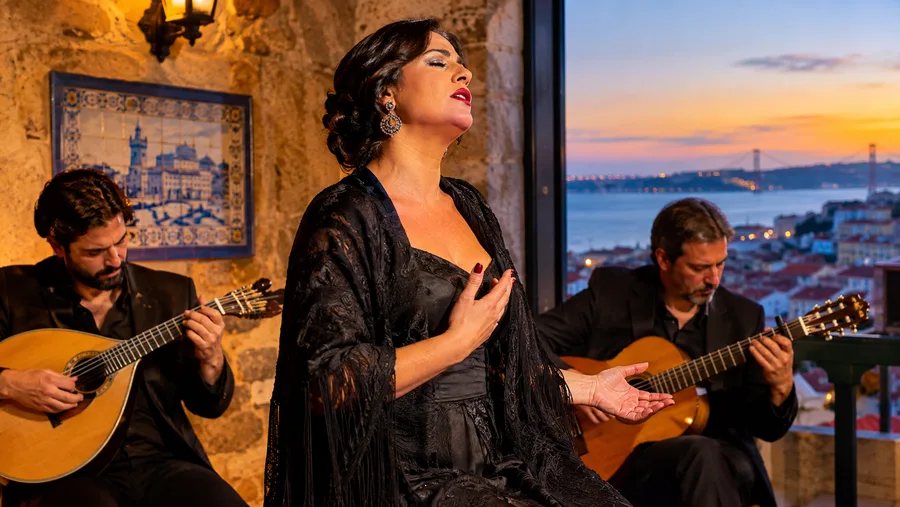
Recordings are wonderful, but fado was engineered specifically for small rooms with reflective plaster walls. If you are traveling to Portugal, hearing authentic fado singers perform live is mandatory. You have two primary environments to choose from, and they offer wildly different atmospheres.
First, you have the upscale casas de fado. These are established venues, mostly scattered across Alfama, Bairro Alto, and Madragoa. You book a table well in advance, pay for a three-course dinner featuring bacalhau or roasted pork, and listen to three or four professional singers rotate through twenty-minute sets between dinner courses. Expect to spend €55 to €95 per person, depending on the house and wine selection. The singing here is technically brilliant, backed by veteran musicians who have played these melodies every night for thirty years.
Second, there is fado vadio, which translates directly to "vagrant" or "amateur" fado. These sessions take place in tiny neighborhood tascas, often hidden down stairs you would otherwise walk right past. There is no stage, no microphone, and no printed program. The cook might step out of the kitchen with an apron covered in flour, lean against the beer cooler, and sing a heartbreaking melody about an estranged brother. Then a 22-year-old student steps up, followed by a retired dockworker. The quality fluctuates, but the honesty is staggering.
To avoid irritating locals when attending a performance, keep a few behavioral standards in mind:
- Keep silent the second guitars tune: Portuguese audiences treat chatting during a song as a personal insult; keep your voice down and put your phone away.
- Wait to eat until breaks: during a set, forks should stay on plates so the clatter of metal does not echo across the room.
- Expect late start times: quality singing rarely starts before 9:30 or 10:00 at night, with the best sets often unfolding well after midnight.
- Hold applause for the final note: let the final acoustic chord fade into silence before clapping; premature clapping breaks the spell.
Book your fado show lisbon experience:
Frequently Asked Questions about famous fado singers
Who is considered the greatest fado singer of all time?
Amália Rodrigues is almost universally recognized as the greatest fado singer in history. Her career spanned six decades, she popularized the music worldwide, and she established the performance aesthetic that vocalists still follow today.
What is the difference between Lisbon fado singers and Coimbra fado singers?
Lisbon fado was created by working-class sailors and tavern workers; it is sung by both men and women and focuses on street life, tragedy, and everyday hardships. Coimbra fado is sung exclusively by men associated with the historic University of Coimbra, dressed in black academic capes, with lyrics focusing on student romance, academic life, and philosophical yearnings.
Do modern fado singers write their own music?
Some contemporary artists write original lyrics, but most famous fado singers interpret a mixture of traditional fado melodies (which have fixed structures passed down through generations) and custom compositions written specifically for them by Portuguese poets and composers.
How do young singers train to become professional fado vocalists?
Very few fado singers attend classical conservatories for fado. Instead, they learn by attending neighborhood tascas, watching older masters at late-night fado vadio
Read more about fado show lisbon.