Fado in Alfama: Historic Venues and Walking Tours
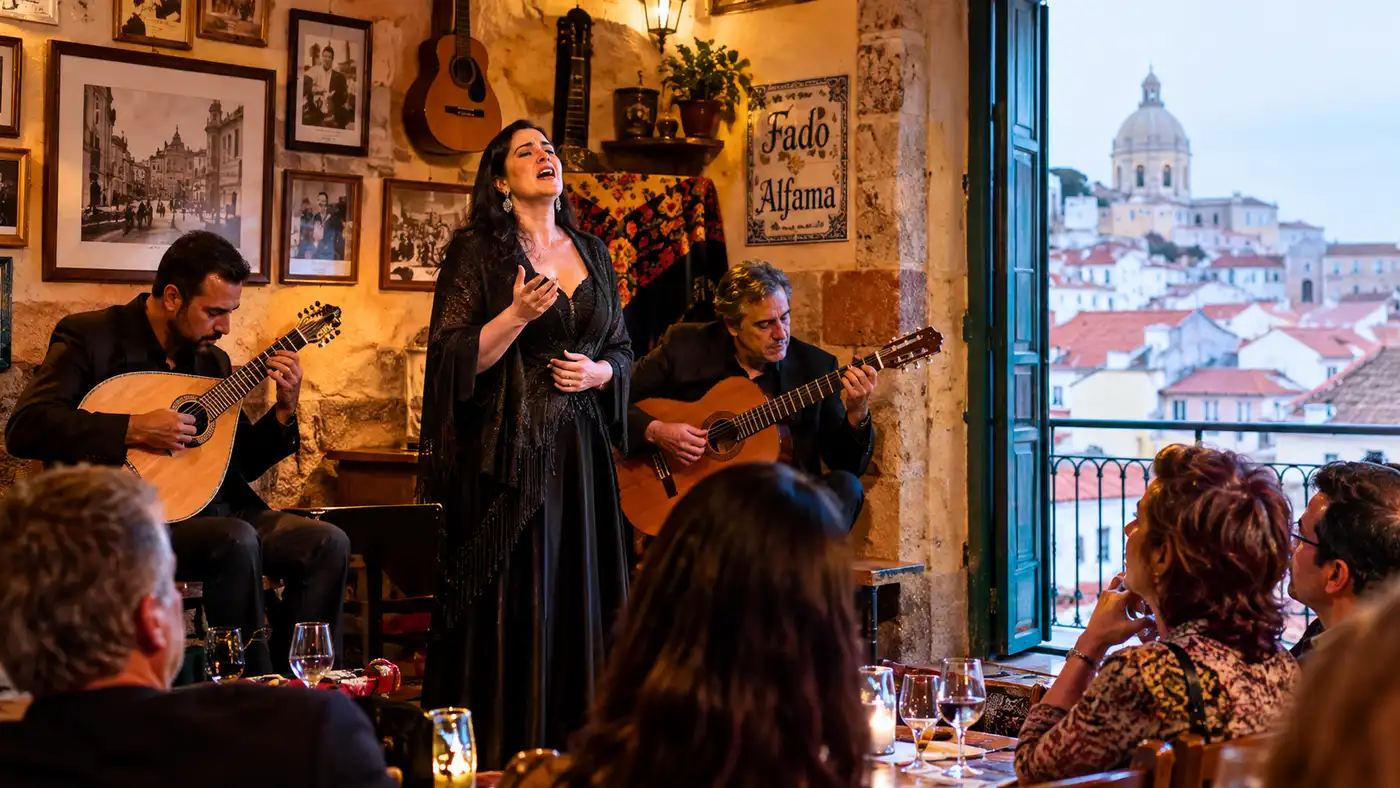
If you walk down the steep calçada of Rua dos Remédios around dusk, Lisbon smells like roasted sardines, diesel, and damp limestone. Wooden shutters creak open, and you can hear the sharp metallic ping of a twelve-string guitar being tuned behind thick velvet curtains. Experiencing authentic fado in alfama is not about sitting in a polished auditorium with reserved seating; it is about squeezing your elbows onto a shared pine table in a low-ceilinged room where somebody's neighbor stops pouring wine, leans back against a tiled wall, and sings about grief until the whole room freezes mid-chew.
Alfama is Lisbon’s oldest quarter, and its tangled geography shaped this music. Surviving the 1755 earthquake meant the district kept its labyrinthine Moorish street layout, creating pockets of acoustic intimacy you simply cannot find in the wide boulevards of Baixa or Chiado. This guide covers the historic taverns, hidden family-run houses, self-guided paths, and guided tours that make an evening here unforgettable.
Book your fado show lisbon experience:
The Living History of Fado Music in Alfama
Fado grew out of maritime isolation and working-class misery in the early 1800s. Dockworkers, sailors, and tavern keepers gathered in back alleys along the riverfront to trade songs about absent lovers, shipwrecks, and hard luck. The Portuguese call this feeling saudade, a word that does not translate neatly into English but sits somewhere between melancholy, longing, and bitter acceptance. If you want a deeper dive into the origins and poetic forms of the genre, read our guide on what fado music really means.
Alfama was the incubator. The music was illicit for decades, sung by petty thieves and prostitutes in murky corners before aristocrats drifted down the hills to listen. The voice was raw, direct, and unamplified. It bounced off bare stone walls and echoed through claustrophobic courtyards like Beco das Cruzes. Even now, after commercial record labels and UNESCO heritage status turned it into a national symbol, you can still catch that rebellious street grit if you know which doorways to peer into.
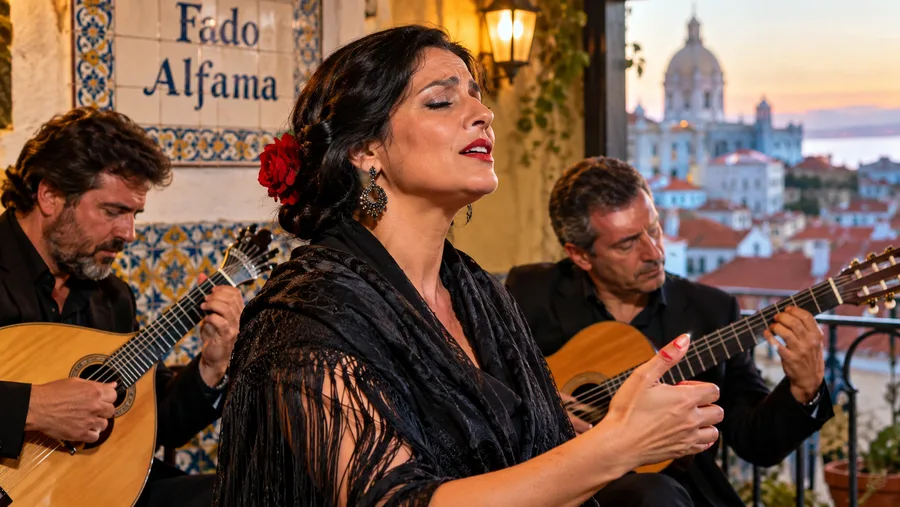
The instrumentation has barely changed in 150 years. A classical Spanish guitar, known here as the viola de fado, lays down low rhythmic basslines while the pear-shaped Portuguese guitar weaves bright, teardrop arpeggios over top. The singer stands between them, draped in a dark wool shawl, eyes closed, projecting straight from the ribcage. No microphones. No stage lights. Just three people holding thirty strangers hostage in the dark.
Iconic Historic Houses and Taverns for Fado Alfama
Choosing where to spend your evening can feel overwhelming because tourist traps sit right beside genuine institutions. On Rua dos Remédios and Calçada de São Vicente, touts stand outside waving laminated menus translated into six languages. Walk past them. The spots worth your money tend to have curtained doorways, discreet bronze plaques, and late opening hours.
Mesa de Frades on Rua dos Remedios 139 is perhaps the most visually striking room in the city. It was originally an 18th-century chapel, complete with historic blue-and-white azulejos on the walls and gold leaf curling around the archways. The tables are packed shoulder to shoulder. Dinner starts around 8:30 PM, but the serious singing rarely begins before 10:15 PM, often drawing top-tier professional performers after their main paid shifts end elsewhere. If you want a full meal paired with a high-end showcase, browse our curated list of the best fado restaurants and houses in Lisbon.
Pro tip: If the musicians start playing while your food arrives, put your fork down immediately. Clinking silverware against ceramic is the quickest way to earn a furious glare from the fadista.
For an earthier experience, hunt down A Baiuca on Rua de São Miguel. This is the headquarters for fado vadio, or amateur fado. There is no set program. The cook might step out of the kitchen with an apron covered in flour, wipe her hands on a cloth, sing three devastating verses, and walk right back to the stove. The acoustics are harsh, the house red wine is cheap and slightly acidic, and the space fits maybe 28 people. It is chaotic and perfect.
Clube de Fado, tucked near the Sé Cathedral, represents the classical, polished side of alfama fado music. Founded by legendary guitarist Mário Pacheco, it attracts seasoned purists and high-profile guests. The Gothic stone arches provide fantastic natural resonance. You will pay more here, but the musicianship is consistently world-class.
| Venue | Location | Style | Typical Cost | Atmosphere |
|---|---|---|---|---|
| Mesa de Frades | Rua dos Remédios 139 | Traditional / Chapel | €60 - €80 with dinner | Intimate, historic, candlelit |
| A Baiuca | Rua de São Miguel 20 | Fado Vadio (Amateur) | €30 - €45 with dinner | Loud, cramped, spontaneous |
| Parreirinha de Alfama | Beco do Espírito Santo 1 | Historic Formal House | €50 - €70 with dinner | Old-school, romantic, quiet |
| Tasca do Chico (Alfama) | Rua dos Remédios 83 | Casual Tavern | €15 - €25 (drinks & petiscos) | Rowdy, standing-room, student mix |
| Clube de Fado | Rua de São João da Praça 86 | Upscale Classical | €70 - €95 with dinner | Refined, acoustic, stone arches |
Taking a Guided Fado Tour in Lisbon
Joining an evening walking tour through the neighborhood sounds touristy on paper, but in Alfama, it often proves genuinely useful. The district is a geometric puzzle. GPS signals bounce erratically off tall granite walls, leaving you stranded in dead-end alleys while your reservation window ticks away. A good local guide bypasses the confusion entirely.
A typical fado tour lisbon route kicks off around 6:30 PM near the river at Largo do Chafariz de Dentro. You wind through the lower alleys, stopping at unmarked doorways where older residents sell small plastic cups of homemade ginjinha for €1.50 from their ground-floor kitchen windows. Along the way, guides break down the history of the Severa family, Maria the fado pioneer, and the political censorship the genre endured during the Salazar dictatorship between 1933 and 1968.
Note: Taxis and rideshare vehicles cannot fit through the medieval alleyways of Upper Alfama, so expect a steep 15-minute uphill walk over uneven cobblestones to reach many venues.
Most guided walks finish with a shared table at a small tavern. The main benefit here is social momentum. If you show up alone at an authentic fado house without Portuguese language skills, you might feel like an intruder. Guided groups usually have pre-arranged access to family-run spots that otherwise pretend to be full when casual wanderers knock at the door.
Book your fado show lisbon experience:
Essential Etiquette and Practical Advice
Fado is treated as a solemn cultural ritual, not background music for your conversation. Locals take room manners very seriously. If you violate basic etiquette, people will openly shush you, and tavern owners have no hesitation about cutting off service to loud tables.
- Silence is absolute: When the lights dim and the guitars start, stop talking instantly. Do not whisper, do not order drinks, and turn your smartphone screen off completely.
- Understand the couvert charge: When you sit down, servers will drop bread, sheep cheese, marinated carrots, and olives on your table. These are not free gifts. If you touch them, you will pay between €4 and €12 extra on your final bill.
- Pace your evening around the sets: Performances happen in chunks of three or four songs, followed by a twenty-minute pause where people talk, eat, and refill carafes. Time your bathroom breaks and food orders for these intermissions.
- Wear sensible shoes: The limestone cobblestones in Alfama have been worn smooth by centuries of footsteps. When night mist rolls up from the Tagus, those stones turn slick as ice. Leave high heels at the hotel.
Self-Guided Walking Route for Fado Enthusiasts
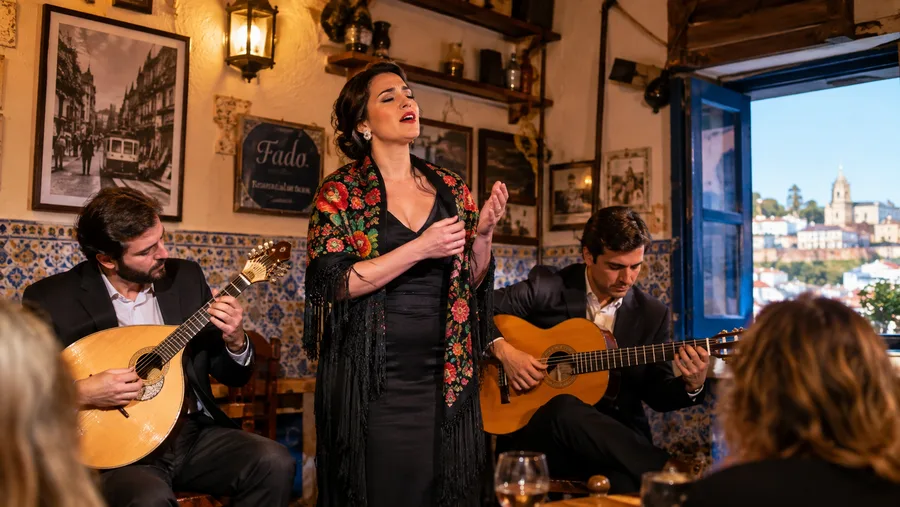
If you prefer exploring without a group, you can trace the history of the music on foot in about two hours before heading inside for a late show. The neighborhood is compact, but the elevation shifts will work your calves.
- Start at Museu do Fado: Located at Largo do Chafariz de Dentro 1, this museum costs €5 to enter. It holds vintage recordings, antique guitars, and paintings by José Malhoa that show what nineteenth-century Lisbon dive bars looked like. Spend 45 minutes here to anchor your context.
- Climb Calçadinha de Santo Estêvão: Walk past the church steps. The acoustics in this tiny elevated square are remarkable, and on warm Thursday and Friday nights, local teenagers and old men often bring acoustic instruments outside to jam on the steps.
- Navigate Beco do Carneiro: One of the narrowest residential tunnels in the city. The laundry hanging overhead traps street noise, and you will hear residents listening to Amália Rodrigues on their kitchen radios as dinner gets cooked.
- End at Miradouro das Portas do Sol: Arrive here right as twilight turns purple over the red-tiled roofs. From this viewpoint, you look out over the entire cascade of Alfama dropping into the black water of the Tagus. The view explains why every second fado lyric talks about the sea.
After reaching Portas do Sol, cut down the stairs toward Rua de São João da Praça. By 8:45 PM, the heavy wooden doors of the taverns begin swinging open, releasing the sharp scent of garlic, olive oil, and charred chorizo into the cool night air.
Frequently Asked Questions about fado in alfama
What time does live fado music in Alfama actually start?
Most restaurants seat guests for dinner between 7:30 PM and 8:30 PM, but the singing rarely begins before 9:00 PM or 9:30 PM. In casual tascas and fado vadio bars, the best music often happens between 10:30 PM and 1:00 AM.
Do I need to make reservations weeks in advance?
For famous spots like Mesa de Frades or Clube de Fado, book at least two weeks ahead during peak summer and autumn months. Smaller tascas like A Baiuca run on first-come, first-served lists or phone bookings taken a day or two prior.
Is fado in Alfama suitable for young kids?
Honestly, it depends on the child. The rooms are cramped, hot, and smoke-heavy, and audiences must sit in absolute silence for 20-minute stretches in the dark. Most children under ten struggle with the rigid atmosphere and late hours.
How much should I expect to spend for an evening of fado?
A full dinner show at an established venue runs between €50 and €85 per person including wine. If you visit a small tavern just for petiscos, beer, and a couple of song sets, you can easily get by for €20 to €30 per person.
Quick Reference
- Peak performance window: 9:30 PM to midnight
- Average dinner show cost: €55 to €80 per person
- Closest metro stop: Santa Apolónia (blue line), 8-minute walk
- Crucial rule: Complete silence during all musical sets
Book your fado show lisbon experience:
The Bottom Line
Do not come to Alfama expecting high-gloss entertainment. The songs are sad, the venues are hot, and the wooden stools will make your back ache after an hour. But when a fadista stands under a solitary incandescent bulb, tilts her head back, and belts out a melody that has stayed alive in these same stones for two hundred years, everything else fades away. Pick a side street, follow the sound of guitar chords, and take a seat in the dark.
Read more about fado show lisbon.